Avoid problems by keeping an inventory of your valuables
A structured inventory of your valuables protects your estate, your memory and your peace of mind. 8 situations to avoid.

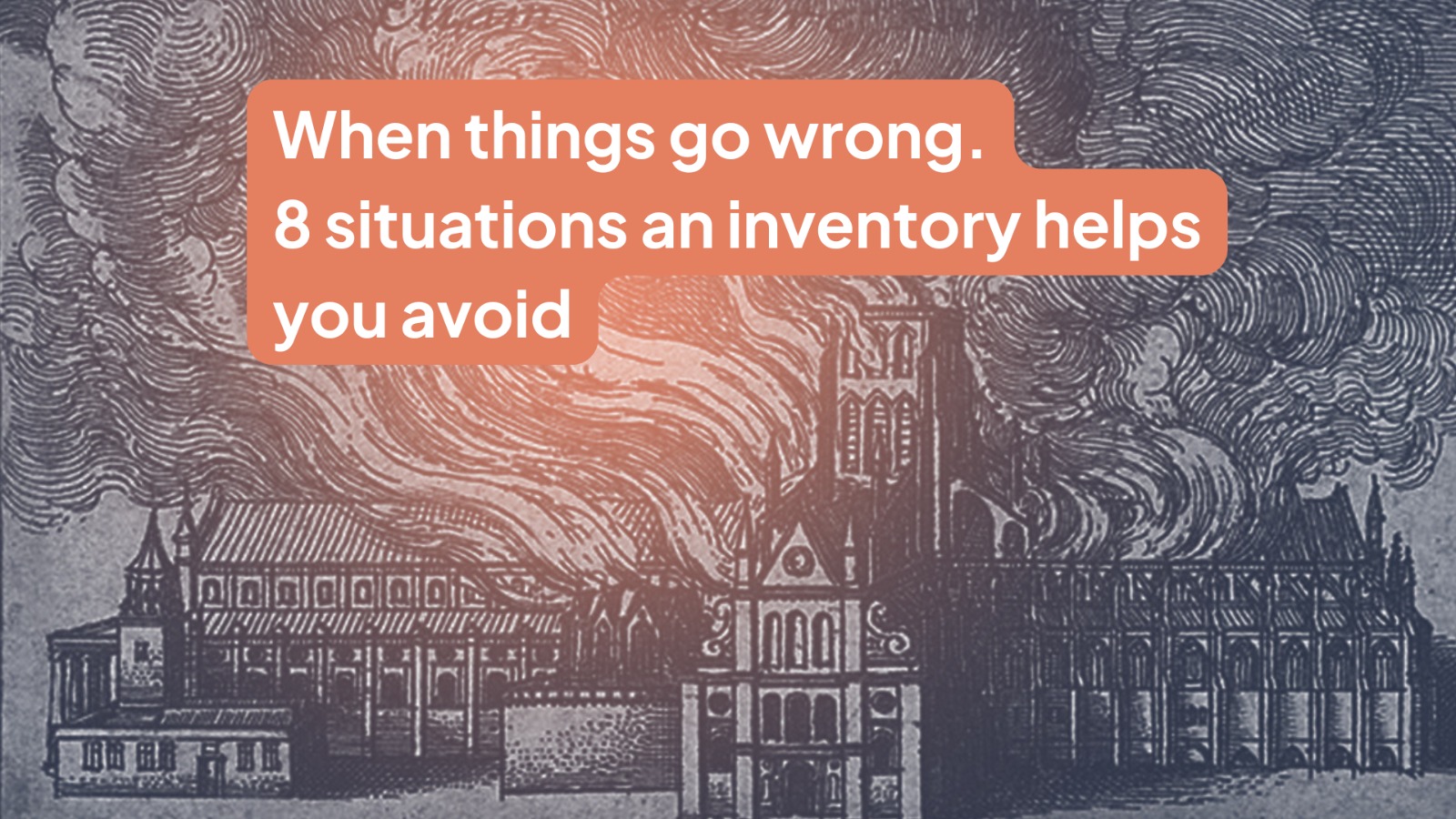
Creating an inventory of your valuables protects your estate,your memory and your peace of mind: document, structure and anticipate theunexpected.
Why take an inventory of your valuables?
Most people don’t — and, withoutrealising it, expose themselves to complex, costly and time-consumingsituations that could easily have been avoided. Over the past eighteen months,through our conversations with clients, collectors, families and partners, wehave come across many revealing cases. These experiences shaped the developmentof Objectory, the first application dedicated to managing and inventoryingvaluables.
In this article, we’ve chosen tobring together eight concrete situations, experienced in the field, to show howsimple it is to guard against these difficulties through a structuredinventory.
When we talk about valuables, it’s a very broadfield. It includes everyday goods — furniture, clothing, equipment — aswell as more precious items such as watches, jewellery, musical instruments,works of art or collectibles. Together,these assets make up what is known as movable heritage, often underestimated inoverall wealth management.
Our experience also shows that when our clientsstart drawing up an inventory of their belongings, surprise is common. Someobjects come to mind immediately — like the piano in the living room or a watchworn every day. Others, more discreet, are often forgotten: comic books lent tofriends, objects stored in a second home, or belongings tucked away for yearswithout any real documentation.
“Creating aninventory of valuables is today a pillar of modern wealth management that isall too often overlooked.”
Without an inventory, it’s not only the objectsthat risk being forgotten, but also their essential documentation: invoices,certificates, warranties, proof of ownership or details of provenance. Aslong as nothing happens, this lack of structure goes unnoticed. But at thefirst problem — a loss, a dispute, a transfer or an administrative procedure —the gaps appear abruptly, leading to loss of value, conflicts, or long andcomplex processes.
Based on our field experience,we have identified eight key situations in which the absence of an inventory ofvaluables turns a simple setback into a genuine ordeal.
1. The loss: when memoryis no longer enough to prove the value of your objects
After a theft, a fire or water damage, theshock is emotional at first. Then comes the administrative reckoning,relentless. The insurer asks simple, almost cold questions: what did youown? What was the value ofthese objects? Can you provide proof?
Without an inventory of yourvaluables, the answer becomes a real quest. You dig through your memories,boxes, hard drives, old emails. You find a blurry photo, an incomplete invoice,an outdated estimate. Every omission weakens the case. Every uncertainty delayscompensation and complicates the relationship with the insurer.
In these situations, a clear,structured and documented inventory becomes a central tool for managing bothwealth and insurance. It makes it possible to prove ownership, justify thevalue of the goods and speed up the process. It doesn’t remove the shock of theloss, but it does avoid a double penalty: emotional and administrative.
2. A collection without provenance is a fragile collection
A work of art, a collector’sitem or a rare piece only fully exists through what accompanies it: its origin,its provenance, its history, its context. Without these elements, even thefinest collection loses part of its meaning — and its value.
Many private collections operatein a grey area: a few photos stored on a phone, vague memories, scattered orpartially lost documents. Over time, this information fades. Value becomesdebatable. Resale becomes complicated. Passing the collection on becomes asource of tension or uncertainty.
Documenting a collection of artor precious objects means giving it a lasting heritage structure. It is anessential prerequisite for any long-term management of valuables, whether theaim is conservation, resale, insurance or transmission within the family.
3. Art professionals: when managing collections wastes precious time
Gallerists, experts, curators and art dealersknow this reality well: spending more time looking for information thanadvising their clients. Rebuilding an inventory from email exchanges,scattered messages, old photos or multiple versions of the same documentbecomes a daily exercise.
This disorder isn’t merelyuncomfortable. It consumes considerable time, generates errors, slows downdecision-making and can, over time, damage professional credibility. In asector where trust and precision are essential, the absence of a structured toolbecomes a real obstacle.
Conversely, having a clear andsecure inventory tool makes it possible to professionalise the management ofclient collections, centralise key information and strengthen the quality ofwealth advice. The time saved can then be devoted to what matters: expertise,client relationships and the valuation of the works.
4. When the history of objects disappears, part of their value fades
An object without a storybecomes interchangeable. An object with a story becomes irreplaceable.
Who acquired it? When? In what context? Forwhat reason? These stories, often passed on orally within families or betweencollectors, fade away in silence. A single generation is sometimes enough forthem to vanish.
Preserving the history ofvaluables means preserving a heritage memory as much as a financial value.These intangible elements enhance the interest of a work or object, whether theaim is to keep it, pass it on or resell it. Without documentation, this essentialdimension is lost — and with it, part of the object’s meaning and value.
5. Succession and gifts: when uncertainty about valuables fuels conflict
Valuables are often the blind spot ofinheritances and gifts. And yet they are the ones that crystallise themost tension. Not because they represent the largest financial share of anestate, but because they are charged with history, emotion and symbolism.
Without a precise inventory ofmovable heritage, discussions quickly become subjective: who inherits what? On what basis? What is the realvalue of a given object? The absence of a clear framework opens the door tomisunderstandings, frustrations and even lasting family conflicts.
A structured inventory of valuables makestransmission easier and allows notaries, wealth advisers and otherprofessionals to act on the basis of reliable information, to provide theirexpertise within an objective framework and to secure inheritance decisions, inthe interest of all parties.
6. Resale, appraisal and valuation: the importance of a complete file
A well-documented objectimmediately inspires confidence. Its history, its provenance, its descriptionsand its images make the appraiser’s work easier and allow an objectivevaluation. It then circulates more easily on the market, whether privately, professionallyor during a transaction.
Conversely, an object without astructured file sees its value debated, sometimes questioned, even reduced. Theexpert has to work with partial information, the analysis takes longer anduncertainty weighs on the final price.
Quality photos, detaileddescriptions, provenance, acquisition history, certificates or invoices: theseelements are essential levers for valuing movable heritage. A rigorousinventory thus becomes a strategic tool for any process of resale, appraisal oroptimisation of the value of valuables.
7. Incomplete wealth management leads to a biased view of one’s estate
Modern wealth management can nolonger be limited to financial assets alone. Ignoring valuables — works of art,jewellery, watches, collections or significant movable assets — means acceptinga partial and biased view of one’s overall estate.
Yet these objects representeconomic, insurance, emotional and sometimes strategic value. Failing toinclude them in an overall wealth approach means missing key issues: insurance,transmission, arbitration, valuation or protection.
Sharing a structured inventoryof valuables with a wealth adviser makes it possible to adopt a more coherent,more strategic and more sustainable approach. It facilitates dialogue, refinesdecisions and places movable assets within an overall wealth vision, on thesame footing as other asset classes.
8. Blended families and new family realities: clarifying to avoid tension
Divorce, blended families, newunions: family structures evolve, and with them wealth issues. In these contexts, clarifying theownership of valuables becomes essential. Who owns what? Within whatlegal framework? As of what date?
Without clear documentation,objects quickly become a source of disputes, misunderstandings or tensions,sometimes out of all proportion to their financial value. A structuredinventory makes it possible to document personal belongings, identify their statusand avoid many conflicts.
Moreover, the coexistence ofseveral distinct estates — private, professional, family — reinforces the needto clarify the legal status of each object. Identifying what falls within theprivate or professional sphere becomes an essential prerequisite for anyrigorous and peaceful wealth management.
Conclusion: to inventory is to choose clarity about your estate
Creating an inventory of yourvaluables is neither a luxury nor an administrative chore. It is an act ofclarity about your estate, and of prevention — essential to protect the value,the coherence and the transmission of your movable heritage.
Modern wealth management can nolonger be limited to financial assets alone. Works of art, jewellery, watches, collections or everyday objects arefully part of the reality of an overall estate.
Documenting them, structuring them and givingthem context means anticipating the unexpected, making decisions easier andpreserving far more than material goods: it means preserving a history, amemory and a lasting value.
This is precisely Objectory’smission: to give individuals, collectors, art professionals and wealth advisersa reliable and secure tool to manage, enhance and pass on their movableheritage.
Because when it comes to yourestate, the right time to create an inventory is never “later”. It’s now.
Start your inventory!
Protect what matters to you and your loved ones today.



Follow Objectory news
Stay up to date with our news by subscribing to our newsletter.